0
item(s)
View cart
You have no items in your shopping cart.
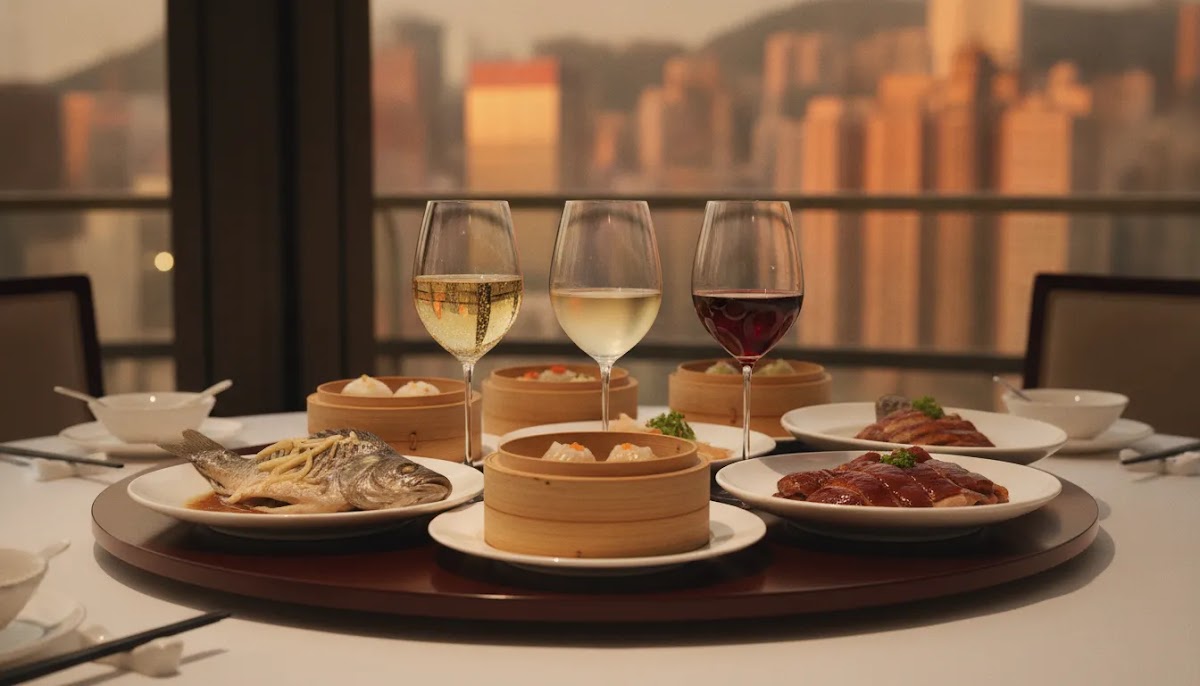
The best wine for Chinese food Hong Kong diners can choose depends on the leading dish: select Sauvignon Blanc for dim sum, Riesling for spice, Cava for char siu, Chablis for steamed fish, and Champagne for Peking duck. Fresh whites and sparkling wines usually offer the most flexible match across a Cantonese table.
However, a Cantonese table rarely asks one wine to do everything. Steamed fish needs precision, while char siu benefits from freshness. Peking duck can take more texture, and dim sum changes from one basket to the next. This ranked selection focuses on five bottles available in Hong Kong, chosen by dish type rather than broad ideas about “Chinese food.” You will find wines that handle sweetness, spice, soy, roast flavors, and delicate seafood. For a broader foundation, read Wine Pairing With Asian Food: Chinese, Dim Sum & More.
Chinese cuisine creates contrast through texture, aromatics, sauce, and cooking method. For example, high-acid wine can reset the palate after roast meats or fried dim sum. Meanwhile, a softer, more textured bottle may suit richer dishes. The five selections below are not a claim that one wine is universally best. Instead, they are practical, dish-led choices for Hong Kong dinners, based on their listed grape varieties, regional character, and style.
| Chinese dish type | Wine | Style and origin | Key characteristics | Price |
|---|---|---|---|---|
| Dim sum, prawns, steamed shellfish | Shaw + Smith Sauvignon Blanc 2025 | Sauvignon Blanc, Adelaide Hills, Australia | Lychee, orange blossom, citrus peel, flint, precise acidity | $185 |
| Spicy dishes, ginger-scallion chicken, aromatic pork | Domaine Paul Blanck Riesling 2024 | Riesling, Alsace, France | Elderflower, Granny Smith apple, lemon, pineapple, mineral notes | $190 |
| Char siu, roast pork, fried snacks | Pere Ventura Tresor Brut Gran Reserva Cava 2022 | Macabeu, Xarel·lo, Parellada, Penedès, Spain | Apple, citrus, dried nuts, cereal, pastry, firm palate | $188 |
| Steamed fish, lobster noodles, refined seafood | Le Domaine d'Henri Chablis 1er Cru Fourchaume 2020 | Chardonnay, Chablis Premier Cru, Burgundy | Brioche, citrus, ripe melon, saline acidity, structured finish | $420 |
| Peking duck, banquet menus, celebratory sharing | Louis Roederer Collection 244 - Magnum (with gift box) | Champagne blend, Champagne, France | Vibrant fruit, floral notes, delicate minerality, lively acidity | $1,580 |
There is no red wine among these five featured bottles. However, if your menu centers on beef, lamb, or heavily roasted dishes, use a lighter-handed red with moderate tannin. Do not assume every powerful red will work. The difference in expression between Australian Shiraz and Northern Rhône Syrah is useful background for that decision, explained in Shiraz vs Syrah: Same Grape, Completely Different Wines.
White and sparkling wines are usually the more flexible default for Cantonese food. Their acidity refreshes the palate after fried dishes, roast meats, and rich sauces. In addition, lower tannin is less likely to clash with soy, vinegar, or chili. Sauvignon Blanc, Riesling, Cava, Chablis, and Champagne offer freshness and restraint across a varied table.
Red wine can still work when the food has more depth and savoriness. For example, beef, lamb, roast goose, and deeply braised dishes may suit a lighter red with moderate tannin and good freshness. Avoid treating a full-bodied, high-alcohol red as an automatic match for barbecue or soy-based dishes. Pronounced tannin can feel bitter beside black vinegar or salty soy. Likewise, alcohol may make chili heat and sweet glazes seem stronger.
If one bottle must cover seafood, vegetables, roast meats, and fried dishes, choose white or sparkling wine. Move toward red only when richer meat courses clearly lead the menu.

For a lively dim sum lunch, Shaw + Smith Sauvignon Blanc 2025 is the most direct choice in this lineup. It comes from Australia’s Adelaide Hills and is light to medium-bodied. Its aromas include lychee, orange blossom, cut grass, candied lime, and flint. On the palate, green apple skin, grapefruit pith, and lemon peel meet precise acidity. As a result, it works especially well beside steamed shrimp dumplings, scallop siu mai, and lightly seasoned seafood.
The wine’s citrus-led profile can lift savory dishes without covering their detail. However, it is less convincing beside very sweet barbecue sauces or intensely numbing spice. Riesling or sparkling wine is often more forgiving there.
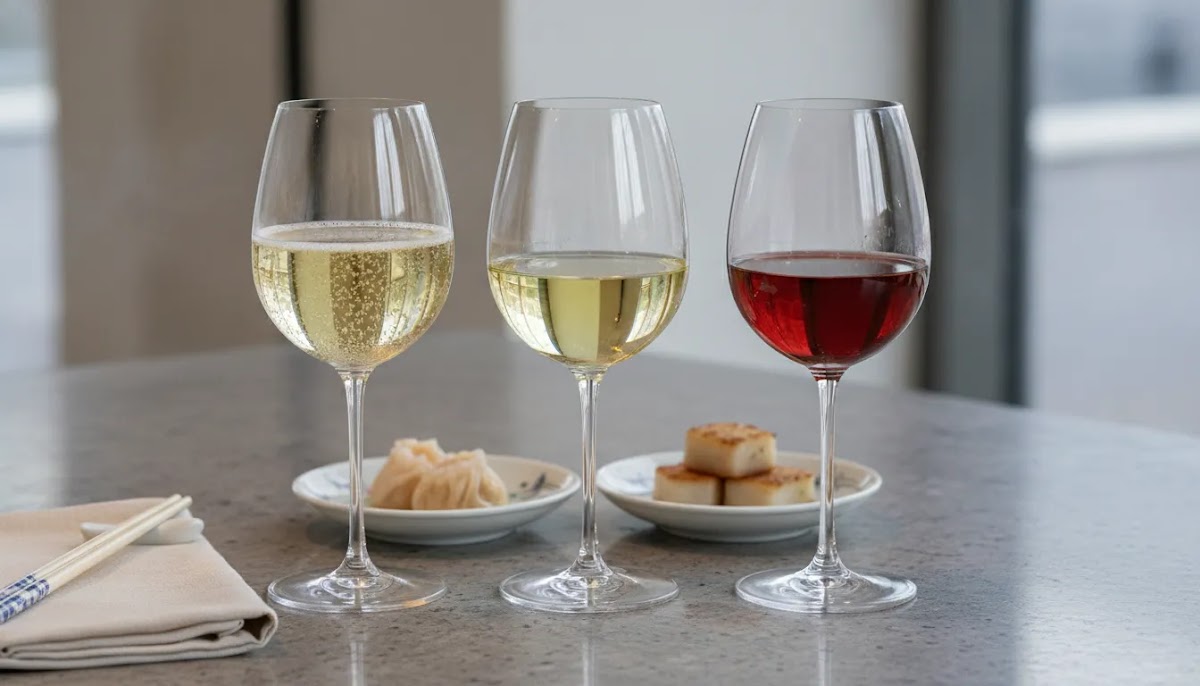

Domaine Paul Blanck Riesling 2024 offers the most adaptable white wine option for dishes with spice, aromatics, or sweet-salty sauces. This Alsace Riesling shows elderflower and Granny Smith apple on the nose. Lemon, pineapple, mineral undertones, sweet floral hints, stone fruit, citrus zest, and a touch of spice follow. Its finely spritzy structure and bright profile make it a sensible match for ginger-scallion chicken, chili prawn dishes, and aromatic pork preparations.
Riesling has a natural affinity with Chinese food because its fruit and acid can meet aromatic ingredients while retaining lift. For more regional context, explore our Alsace wine guide. Importantly, this bottle’s listed profile does not specify sweetness level. Buyers seeking an expressly sweet wine for very fiery food should not assume that style.

Sweet glaze, roast edges, and fatty pork make char siu difficult to pair with rigid, tannic reds. Instead, Pere Ventura Tresor Brut Gran Reserva Cava 2022 takes a different route. It comes from Penedès and uses 40% Macabeu, 40% Xarel·lo, and 20% Parellada. Apple and citrus fruit meet dried nuts, cereal, and toasty nuances. The palate is described as full and firm, with acacia blossom, dried nut, and fresh pastry flavors.
That mix of fresh fruit and savory, age-derived notes can meet roast pork on more equal terms than a very lean white. In addition, it may suit crispy pork, fried spring rolls, and other dishes where texture matters as much as sauce. For a closer look at sparkling styles, read Champagne vs Prosecco vs Cava.

A whole steamed fish with ginger, scallion, and light soy calls for restraint rather than a loud aromatic wine. Le Domaine d'Henri Chablis 1er Cru Fourchaume 2020 is a Chardonnay from the Fourchaume Premier Cru site in Chablis, Burgundy. It shows brioche and reductive notes alongside citrus and ripe melon. Meanwhile, bracing saline acidity balances the ripe fruit core. Its structured palate and length make it compelling for a more formal Cantonese meal.
The saline profile is the key pairing clue. It can mirror the clean, savory character of seafood without adding sweetness or overt perfume. The official Bourgogne Wines site offers further background on Burgundy’s wine regions. Ultimately, reserve this bottle for dishes with careful seasoning and good ingredients.
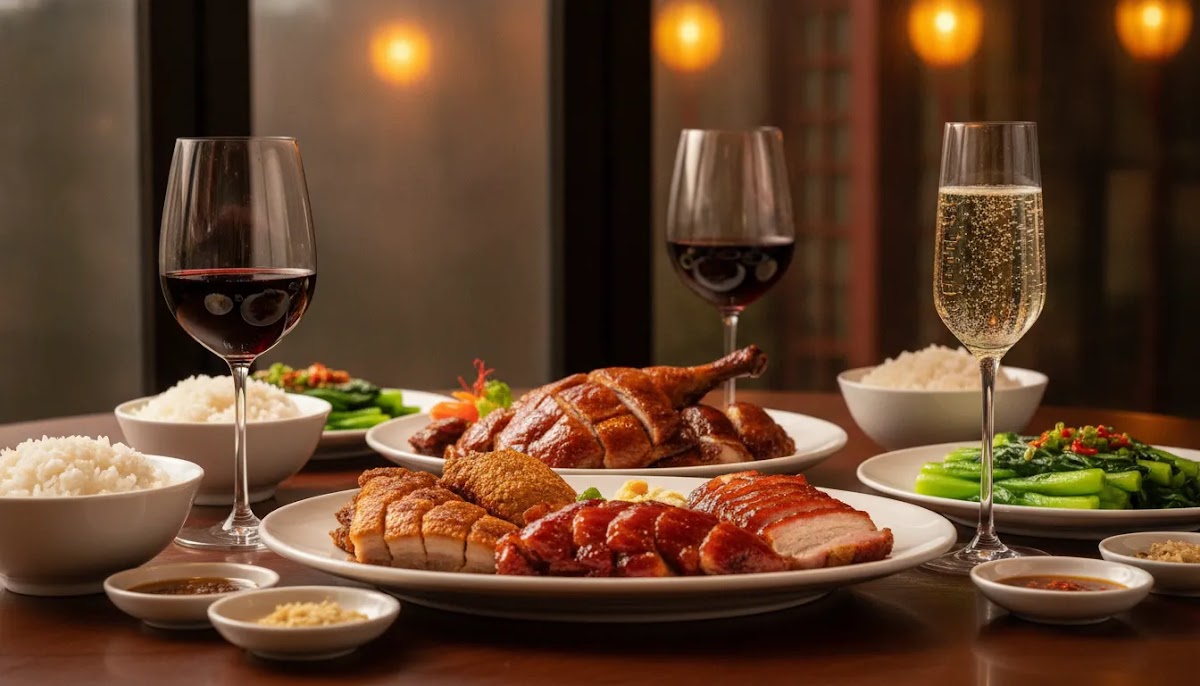
Louis Roederer Collection 244 - Magnum (with gift box) is the celebratory choice for a Peking duck dinner, a large family table, or an important client meal. This French Champagne combines richness and freshness. It has vibrant fruit, floral nuances, delicate minerality, a rounded texture, and lively acidity. In addition, the magnum format and presentation box make it appropriate when the bottle itself is part of the occasion.
Peking duck rewards a wine with acidity to refresh the palate after crisp skin and richness. However, it also benefits from enough texture to avoid seeming thin. This Champagne has that balance on paper. Its scale and price make it better suited to planned celebrations than a casual weekday meal. Learn more about the region through the official Champagne website.
Start with the dominant dish, not the broad cuisine label. A dinner of steamed fish, stir-fried greens, and shrimp dumplings needs a different bottle from a meal centered on roast goose, char siu, and lacquered pork. Importantly, the sauce often matters more than the protein. Sweetness, chili heat, black vinegar, fermented bean paste, and soy can all change how a wine tastes.
Picture a Hong Kong dinner table where the wine tells a story instead of just filling a glass. That is the philosophy behind Bidvino's approach. Every bottle we feature is chosen for its sense of place and the character of the people who made it. As a result, local drinkers have a genuine alternative to predictable, one-size-fits-all pairings. Certified Sommelier Paul William Sargent shapes our editorial picks around how grape, terroir, and occasion meet at the table. Explore the bottles above to build a well-matched dinner lineup. If Chinese cuisine often shapes your wine choices, it is also worth checking out the Bidvino rewards program.
Cooking method can change a pairing as much as the main ingredient. Steaming preserves the clean flavor of fish, prawns, and shellfish. Therefore, crisp Sauvignon Blanc or saline Chablis can stay close to the dish. Stir-frying adds oil, wok aromas, garlic, ginger, and scallion. As a result, Riesling or a fresh white becomes more adaptable. Deep-frying brings richness and texture, which sparkling wine can cut through effectively.
Roasting and braising call for more attention to the sauce. Light soy with steamed fish remains delicate, while oyster sauce adds sweetness and savoriness that can make a lean wine seem sharper. In contrast, black vinegar brings acidity and depth that may overwhelm fine floral notes. A sweet barbecue glaze can make dry, tannic reds feel hard. Cava or Champagne can be useful with roast and glazed dishes because their freshness and texture may handle both oiliness and browned flavors.
Dried seafood, preserved meats, and fermented ingredients add concentrated savory character. Consequently, a textured white, sparkling wine, or restrained red may work better than an overtly fruity or heavily oaked bottle. Choose for the dominant seasoning and texture on the plate. For example, steamed chicken with light soy needs a different wine from braised beef in a deeply savory sauce, even if both dishes are built around protein.
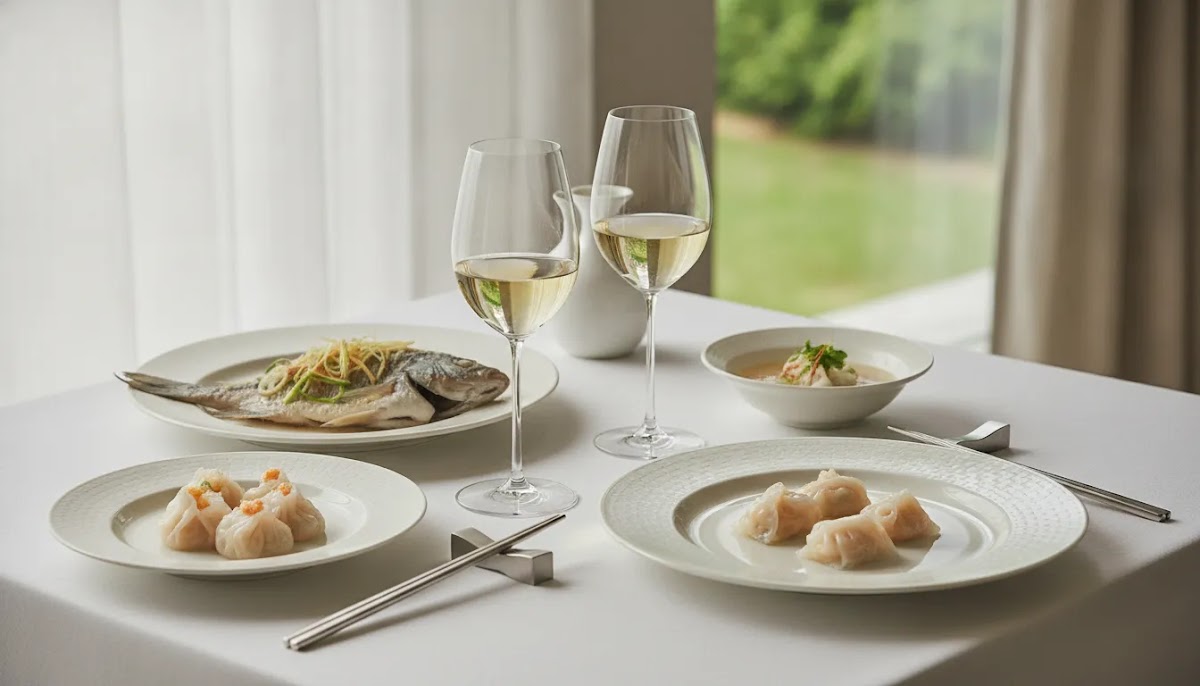
A Cantonese banquet often moves from lighter seafood and dim sum-style starters to richer roast meats, noodles, and celebratory dishes. Start with a crisp white wine for steamed fish, prawns, and shellfish. For example, Shaw + Smith Sauvignon Blanc 2025 is a direct option for opening courses. Le Domaine d'Henri Chablis 1er Cru Fourchaume 2020 can suit a more formal seafood service.
Next, introduce sparkling wine or Champagne as fried dishes, char siu, roast goose, or Peking duck arrive. Pere Ventura Tresor Brut Gran Reserva Cava 2022 offers savory detail for barbecue and crisp textures. Meanwhile, Louis Roederer Collection 244 in magnum format suits a larger celebratory table.
For a small meal with several dishes, one versatile white or sparkling wine is often enough. Two styles give a longer banquet more structure: one fresh white for delicate courses and one sparkling wine for roast and richer courses. A magnum may be practical for larger groups, but it is not necessary for a small table. Finally, chill Sauvignon Blanc and sparkling wines well before service. More complex Cava, Chablis, and Champagne should be cool rather than excessively cold, so their texture and savory details remain noticeable.
A crisp, aromatic white is usually the most flexible place to start. Shaw + Smith Sauvignon Blanc 2025 has precise acidity, citrus peel, green apple skin, and floral aromatics that may suit shrimp dumplings, scallop dishes, and steamed seafood. However, if the meal includes fried dim sum or roast meats, sparkling Cava can offer more savory depth and palate-cleansing freshness.
Champagne can be an excellent choice for Peking duck because lively acidity may refresh the palate after crisp skin and rich meat. Louis Roederer Collection 244 in magnum format is especially suited to a banquet or celebratory dinner. For smaller gatherings, choose a fresh sparkling wine rather than opening a large-format bottle unnecessarily.
Riesling often works very well with Chinese dishes that feature chili, ginger, garlic, aromatic herbs, or sweet-savory sauces. Domaine Paul Blanck Riesling 2024 has lemon, pineapple, apple, floral, mineral, and spice notes, which can complement these flavors. However, the product information does not specify sweetness level, so do not assume it is sweet when planning for very hot dishes.
You can, but avoid treating red wine as the automatic answer. Char siu’s sweetness and roast edges can make heavily tannic reds feel hard or bitter. Instead, a sparkling wine such as Pere Ventura Tresor Brut Gran Reserva Cava 2022 may be more harmonious. Its apple, citrus, nutty, cereal, and pastry notes can handle both savory roast character and glaze.
Match the bottle to the restaurant order. Choose Sauvignon Blanc for seafood-heavy dim sum, Riesling for aromatic or spicy dishes, Cava for barbecue and fried dishes, and Chablis for refined seafood. Champagne in magnum is a polished option for milestone dinners, family celebrations, and formal business occasions where the bottle will be shared widely.
Chablis is Chardonnay, but its style can be markedly different from richer, overtly oaky Chardonnay. Le Domaine d'Henri Chablis 1er Cru Fourchaume 2020 combines citrus and ripe melon with saline acidity, structure, and length. As a result, that savory freshness may complement steamed fish seasoned with ginger and scallion while allowing the fish itself to remain the focus.
Yes. Sparkling wine is often a strong partner for char siu, crispy pork, and fried appetizers because freshness can cut through richness. Pere Ventura Tresor Brut Gran Reserva Cava 2022 also has dried-nut, cereal, and freshly baked pastry notes that may echo browned and roasted barbecue flavors. Serve it chilled, but not excessively cold.
For a short meal, one adaptable sparkling wine or white can be enough. For a multi-course banquet, two styles are more useful: begin with Sauvignon Blanc, Riesling, or Chablis for seafood and lighter courses, then introduce Cava or Champagne as roast meats arrive. This approach gives each wine a clearer role without making service unnecessarily complicated.
Fresh white and sparkling wines are often the best starting point because Chinese meals commonly combine seafood, vegetables, fried dishes, soy-based sauces, and roast meats. Sauvignon Blanc suits lighter seafood, Riesling can work with aromatics and spice, and Cava or Champagne may handle fried and roasted dishes. Ultimately, the best choice depends on the sauce and cooking method rather than the cuisine label alone.
Choose white or sparkling wine if the menu includes several Cantonese dishes, especially seafood, steamed dishes, fried snacks, and sauces containing soy or vinegar. A lighter red with moderate tannin may suit beef, lamb, roast goose, or deeply savory braises. However, high-tannin, high-alcohol reds can feel bitter with soy and black vinegar or intensify chili heat.
Shaoxing wine is a traditional Chinese cooking wine used to add aroma and savory depth to marinades, stir-fries, and braises. It is different from a bottle selected for drinking with dinner. Cooking wines may contain salt or be formulated for culinary use, so they are not generally a substitute for table wine. Use drinking wine for pairing, and use the recipe’s specified cooking wine for preparation.
Tea is often the most natural non-alcoholic accompaniment. However, beer can work with fried or spicy dishes because carbonation refreshes the palate. Spirits may be served during formal meals, though their higher alcohol can make chili feel more intense. For a wide Cantonese menu, a lower-alcohol, refreshing drink is typically easier to manage across multiple courses.
These rankings help you choose a bottle for a specific Chinese dish. They do not declare one winner for every menu.
| Rank | Wine | Best for | Price |
|---|---|---|---|
| 1 | Shaw + Smith Sauvignon Blanc 2025 | Dim sum, shrimp, and light seafood | $185 |
| 2 | Domaine Paul Blanck Riesling 2024 | Spicy and aromatic dishes | $190 |
| 3 | Pere Ventura Tresor Brut Gran Reserva Cava 2022 | Char siu and Chinese barbecue | $188 |
| 4 | Le Domaine d'Henri Chablis 1er Cru Fourchaume 2020 | Steamed fish and formal seafood courses | $420 |
| 5 | Louis Roederer Collection 244 - Magnum (with gift box) | Peking duck, gifting, and celebrations | $1,580 |
For the best wine for Chinese food Hong Kong diners should match the bottle to the meal in front of them. Start with Sauvignon Blanc for delicate dim sum, Riesling for aromatic dishes, Cava for roast pork, Chablis for elegant seafood, and Champagne for a celebratory duck dinner. Each bottle offers a distinct route into Chinese dining. Importantly, freshness and balance take priority over sheer power. Browse the featured wines on Bidvino for your next dinner, whether you are hosting at home, bringing wine to a Cantonese restaurant, or marking a special occasion with family and friends.
A quick note before you pour: enjoying wine well means enjoying it responsibly, and everything we publish here is meant for readers who are 18 or older. The impressions we share about flavor and quality come from our own tasting team. Therefore, keep in mind that a bottle's character can shift depending on its vintage, how it's been stored, and simply the palate doing the tasting. As for what's in stock and what it costs, those details move quickly — head to bidvino.com for the latest.
 Bidvino Customer Service