0
item(s)
View cart
You have no items in your shopping cart.

The Mendoza wine region reveals itself through where its Malbec was grown: warm, lower-elevation Luján de Cuyo or high Uco Valley. Altitude, alluvial soils, mountain water, sunlight, and cool nights shape wines from plush, generous reds to fresher, mineral-led expressions. For broader context on the continent’s wine cultures, begin with the South American & South African Wine Guide.
This guide suits beginners who have enjoyed Mendoza Malbec and want to move beyond a single broad regional label. It is equally useful for intermediate drinkers deciding between Luján de Cuyo, Maipú, and Uco Valley bottlings, or for anyone choosing a serious Argentine red for a Hong Kong dinner table. The central idea is simple: Mendoza is not one style. Its wines reflect a broad elevational range, different soil profiles, and producers’ choices in vineyard and cellar.
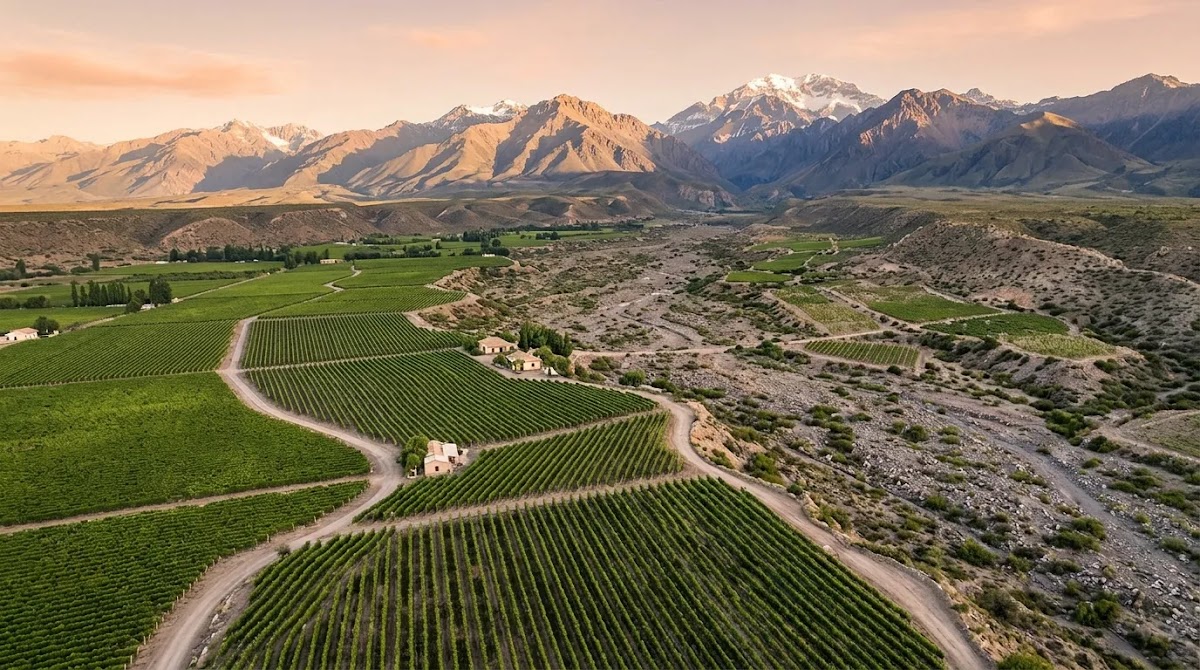
Mendoza sits on the eastern side of the Andes, where vineyards depend on snowmelt carried down from the mountains. This water supports cultivation in an otherwise dry environment and has helped make the province Argentina’s best-known wine area. Dry conditions can reduce disease pressure, while irrigation allows growers to manage vine growth with precision.
Altitude adds another dimension. As vineyards climb toward the foothills, daytime sunshine remains intense but temperatures usually fall more sharply at night. That diurnal range can slow the loss of acidity and preserve aromatic detail as grapes ripen. The result is not automatically better wine, but it can produce wines with a different shape: brighter fruit, firmer tannin, fresher acidity, and sometimes a more stony or floral character.
Soils are often alluvial, built from material carried down from the Andes over long periods. They vary greatly by site, from deeper sand and clay mixtures to areas marked by gravel, stones, and limestone influence. A regional name tells only part of the story. Vineyard location, elevation, vine age, yield, harvest date, and oak treatment all matter.
Mendoza is Argentina’s leading wine-producing province, and its scale has made it central to how the country is understood by wine drinkers around the world. The province produces wines across a wide range of styles and price points, while Malbec has become its most recognizable international calling card. The Wines of Argentina organization offers further context on the country’s wine regions and producers.
European immigration and historic vine planting helped establish Mendoza’s wine culture, supported by irrigation systems that brought Andean snowmelt to cultivated land. That long history explains both the breadth of production and the depth of local knowledge found across the province’s vineyards and cellars.
Mendoza remains an important source of broadly labeled Argentine wine, but its identity is increasingly tied to more precise origins. High-altitude vineyards, named fincas, and single-vineyard bottlings give producers a way to show how particular sites differ in soil, temperature, and structure. This more detailed approach does not replace Mendoza’s larger production base. It gives curious drinkers more ways to understand it.

| Zone | Typical character stated in this guide |
|---|---|
| Luján de Cuyo | Generous fruit, supple tannin, and classic Mendoza richness |
| Maipú | Ripe fruit expression, broad texture, spice, and generous palate |
| Uco Valley | Freshness, tension, floral or mineral detail, and firmer structure |
| Eastern Mendoza | Warmer, lower sites with fruit-forward bottles |
Luján de Cuyo is among Mendoza’s most established fine-wine areas and has long been closely associated with Malbec. Its vineyards generally sit at lower elevations than many Uco Valley sites, though altitude still varies substantially. Wines from this Mendoza wine region zone often show dark plum, blackberry, violet, cocoa, and supple tannin. The best examples maintain freshness beneath their generous fruit, rather than relying on sheer weight.
For drinkers who appreciate rounded texture and familiar Malbec richness, Luján de Cuyo is a useful starting point. Agrelo, within Luján de Cuyo, is particularly relevant for structured reds made from Malbec, Cabernet Sauvignon, and Cabernet Franc.
Maipú lies closer to Mendoza city and is one of the province’s historic vineyard districts. Its generally warmer conditions can encourage ripe fruit expression and broad texture, particularly in red varieties. Mature vineyards and long-standing irrigation traditions remain important parts of its identity.
Maipú wines can be satisfying at the table when the food has depth or char. A well-made red may show black fruit, spice, and a generous palate, while retaining enough freshness to avoid becoming cumbersome. Producer technique is especially important here, since oak choices and picking decisions strongly influence the finished style.
The Uco Valley, south of Mendoza city, has become a reference point for high-altitude Argentine wine. Its subzones include Tupungato, Tunuyán, and San Carlos, with vineyard sites often planted at notably elevated positions. Cooler nights and diverse alluvial soils can bring tension and lift to red wines, alongside citrus, stone fruit, and mineral notes in whites.
Malbec from the Uco Valley often tends toward violet, black cherry, plum skin, herbal detail, and more pronounced tannin than softer Mendoza expressions. Cabernet Franc can be especially compelling here, where freshness and savory notes can balance the variety’s natural herbal profile.
Eastern Mendoza is generally warmer and lower than the western foothill zones. It has historically supplied a large share of Argentine wine production and remains important to the wider Mendoza story. While its wines may not always be marketed around altitude or individual parcels, careful vineyard work can still yield enjoyable, fruit-forward bottles.
Maipú and Luján de Cuyo are generally the most convenient wine areas for visitors staying in Mendoza city. Their relative proximity can make them practical choices for a day of tastings, while Maipú’s historic estates and Luján de Cuyo’s established Malbec producers offer different perspectives on the province’s wine culture.
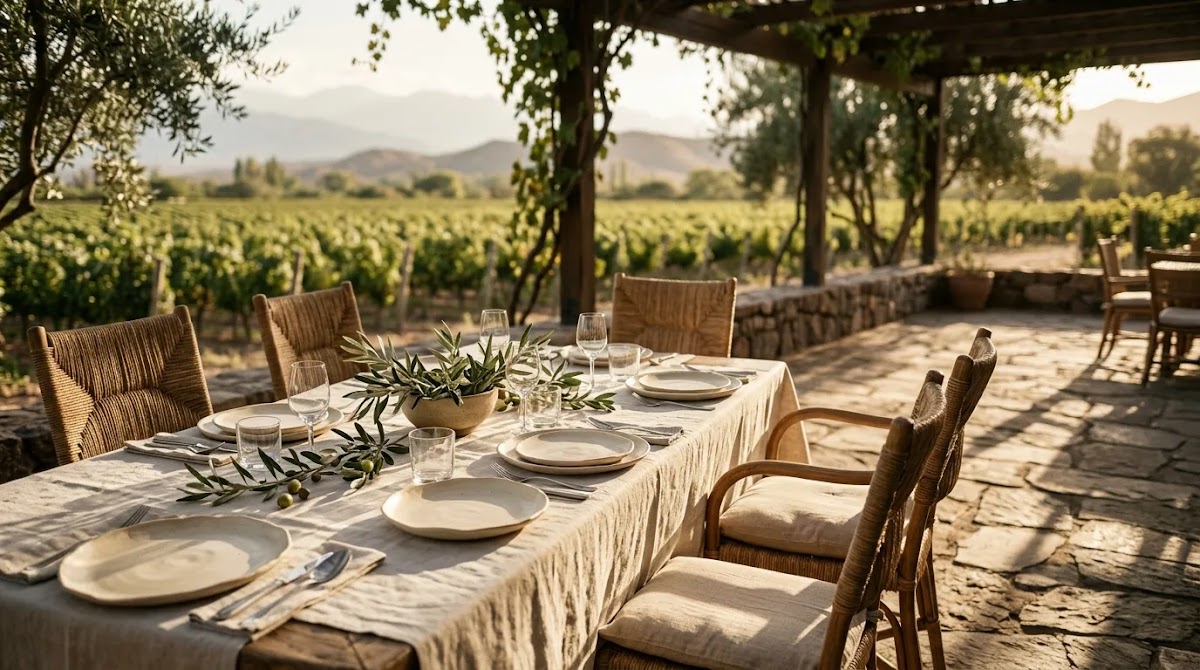
The Uco Valley usually requires more travel time and has a more rural, high-altitude setting. Its mountain views, vineyard landscapes, and winery restaurants can make it especially appealing for travelers who want to spend a full day focused on food and wine rather than fitting several brief visits around the city.
Book tastings and winery meals in advance, particularly during harvest and other busy travel periods. Winery visits involve alcohol consumption, so arrange a driver, guided transport, or another safe return journey before tasting. This allows you to focus on the wines, the food, and the differences between each site without making travel safety an afterthought.
Altitude should be treated as a clue rather than a guarantee. Higher sites often experience cooler nights, which can help grapes retain acidity through the growing season. That retained freshness may make a red feel more energetic, even where the fruit is fully ripe. It can also influence tannin perception, making structure feel firmer or more linear.
Lower or warmer sites may ripen grapes more readily, often bringing rounder fruit, softer edges, and a broader mid-palate. Neither expression is inherently superior. The more useful question is whether the wine’s fruit, acidity, alcohol, tannin, and oak feel balanced for your taste and the meal you plan to serve.
For Malbec, altitude can move the profile from plush blueberry, plum, and chocolate toward darker cherry, violets, spice, and mineral detail. Cabernet Sauvignon may retain a more precise herbal edge at cooler sites. Chardonnay from elevated vineyards can show citrus freshness and firm texture rather than only overtly tropical fruit.
Picture a hillside in Mendoza, sun-baked by day and cooled by Andean air at night. That push and pull is exactly why Malbec found its true home here. The grape thrives on this contrast, turning it into wines with rich color, waves of black and blue fruit, a lift of violet perfume, and tannins that shift from silky to structured depending on where the vines grow. Curious to dig deeper into what makes this grape tick? Our Malbec Wine Guide: Argentina's Signature Grape Explained walks through its core characteristics and the many styles it can take.
Cabernet Sauvignon often brings cassis, cherry, pepper, herbs, and structure to Mendoza’s reds. Cabernet Franc can show red and black fruit alongside more aromatic, savory notes. Both varieties may be bottled on their own or blended with Malbec to add lift, structure, or a more complex aromatic profile.
These varieties also make Mendoza useful for drinkers who enjoy Bordeaux-shaped reds but want a riper-fruited, Argentine interpretation. Comparing Malbec’s expression with its French origins can sharpen that understanding. See Argentine Malbec vs French Malbec: Same Grape, Two Worlds for that stylistic contrast.
Syrah can thrive in Mendoza’s bright conditions, offering dark fruit, pepper, and floral notes. A small addition of Viognier can add aromatic lift and texture in a Syrah-led blend. This practice has roots in the northern Rhône, though Mendoza expressions retain their own sunlit character. For the distinction between regional naming and style, explore Shiraz vs Syrah: Same Grape, Completely Different Wines.
Chardonnay is also worth seeking out, especially from elevated sites. The grape can combine ripe fruit with acidity and mineral tension, making it a useful white-wine option for richer seafood, roast chicken, or dishes with creamy sauces. For a wider look at Chardonnay and other popular white grapes, explore our guide.
Start with the broadest place name. Mendoza identifies the province, while Luján de Cuyo, Maipú, and Uco Valley point to more defined areas within it. A smaller name, such as Agrelo, may identify an even more specific district. More precise origin information can help you compare wines, but it does not guarantee quality or a particular style.
Terms such as finca and single vineyard usually indicate that the wine comes from an identified estate or one vineyard site. These details can be useful because they encourage a closer look at location, grape variety, vintage, and producer choices. A single-vineyard wine may show a more focused expression of place, though oak treatment and winemaking still shape the result.
Check the vintage as well. Weather conditions can affect ripeness, acidity, tannin, and the pace at which a wine develops. If altitude is stated, treat it as another helpful clue. Higher vineyards may favor freshness and aromatic detail, while lower, warmer sites may produce broader fruit and softer texture. Read the full label rather than relying on one term alone.
These bottles offer a practical way to taste how Mendoza varieties, vineyard references, and winemaking decisions can shape a wine. They are not a substitute for visiting the region, but they make a thoughtful home tasting possible. Open no more than two or three bottles at a time, use similar glassware, and compare aroma, texture, acidity, and finish before deciding which style speaks most clearly to you.

Price: $290
This Mendoza Malbec carries the Andean idea of Ayni, reciprocity between people and nature. James Suckling awarded it 93 points, describing bright dark berries, dried flowers, orange peel, and chocolate undertones, with plush, creamy tannins and a persistent finish. The individual wooden box makes it especially suitable for a thoughtful gift.

Price: $365
Made from 97% Syrah and 3% Viognier, this Mendoza red shows plum, candied peach, cassis, white pepper, and floral notes. Its fresh, ample palate and smooth, elegant tannins illustrate how Mendoza can offer a spicy, aromatic red beyond Malbec.
Price: $245
This Agrelo, Mendoza Malbec is a useful bottle for readers interested in Luján de Cuyo’s vineyard identity. A named-vineyard wine encourages a more precise way of tasting: focus on whether its fruit, tannin, freshness, and finish differ from a broader Mendoza expression.

Price: $298
This Mendoza Malbec was aged in new French oak barrels for 18 months. It shows red fruit, plum, black cherry, blackberry, and blueberry aromas, with a fresh, full palate, juicy tannins, and an elegant finish. It is a clear example of how oak can add structure around Mendoza’s ripe fruit core.

Price: $310
From plots at 1,350 meters above sea level, this Chardonnay is expressly tied to altitude. Its crunchy texture, freshness, spicy notes, and elegant minerality make it a valuable counterpoint to the idea that Mendoza is only a destination for rich red wines.

Price: $259
This Argentine Cabernet Sauvignon from Agrelo shows herbal notes, red and black fruits, cherry, and peppers. Twelve months in French oak contributes to its structured, intense profile. It is a helpful reference for Mendoza drinkers who want to compare Cabernet’s savory character with Malbec’s more floral and plum-driven personality.
Price: $245
This single-vineyard Cabernet Franc from Agrelo has bright purplish-red color and a distinctly varietal profile. Red and black fruit sit alongside asparagus, grilled red bell pepper, tobacco, and cocoa notes. It is an engaging choice for drinkers who value aromatic complexity and savory detail in their Mendoza reds.

Price: $360
This Mendoza blend brings Malbec and Cabernet Franc together through aromas of tobacco flowers, violets, berries, and black olives. The palate is full-bodied, dense, and polished, with fine, chewy tannins. It demonstrates how blending can add savory and floral complexity to Mendoza’s naturally generous fruit.
Malbec and Cabernet blends usually work best slightly below room temperature, around 16 to 18°C. In Hong Kong’s warmth and humidity, a brief chill before serving is often helpful. Cooler serving temperatures can make tannin feel more composed and help the wine’s freshness show more clearly.
For food, Mendoza reds suit grilled beef, lamb, roast duck, char siu, mushroom dishes, and aged hard cheeses. A more savory Cabernet Franc may be particularly appealing with roasted peppers, herb-driven dishes, or meat cooked over charcoal. Chardonnay from higher sites can suit steamed fish with ginger and scallion, roast chicken, or shellfish with a richer sauce. Find more ideas in our guide to the best wine for Chinese food in Hong Kong.
Decanting is most useful for young, structured reds with evident oak or firm tannin. Start with 30 minutes, taste, and extend only if the wine remains tight. Not every Mendoza red needs prolonged exposure to air.
Malbec can be generous, but high-elevation and carefully managed sites may show floral lift, freshness, and significant tannic structure. Read the vineyard and regional information rather than choosing by grape name alone.
Higher vineyards can bring freshness and detail, but they do not remove the importance of producer choices. Fruit quality, harvest timing, oak use, and bottle age can have just as much influence on the final wine.
Mendoza Cabernet Sauvignon, Cabernet Franc, Syrah, Viognier, and Chardonnay offer a broader picture of the province. Tasting across grapes is one of the best ways to understand the region’s range.
Warm red wine can make alcohol feel prominent and fruit seem heavier than intended. A short chill can reveal better balance, especially in Hong Kong.
Once you can recognize Mendoza’s different expressions, broaden the comparison. Start with the South American & South African Wine Guide to place Argentina alongside Chile and South Africa. Then return to the Malbec Wine Guide: Argentina’s Signature Grape Explained for a closer look at the grape’s aromas, structure, and food affinity.
A useful next tasting is Malbec beside Cabernet Franc or Syrah from Mendoza. This turns a broad regional idea into something tangible: one place, different grapes, and a distinct set of decisions in vineyard and cellar.
Argentina’s most internationally recognized wine-producing province combines dry conditions, mountain irrigation, strong sunshine, and a wide range of vineyard elevations. Mendoza is especially associated with Malbec, though Cabernet Sauvignon, Cabernet Franc, Syrah, Chardonnay, and other varieties also play meaningful roles.
Mendoza is best known for Malbec. The grape can produce deeply colored wines with dark fruit, floral notes, and tannins ranging from rounded and creamy to firm and structured. Mendoza also produces distinctive Cabernet Sauvignon, Cabernet Franc, Syrah, Chardonnay, and blends that show the province’s wider range.
The Mendoza wine region combines strong sunlight, dry conditions, snowmelt irrigation from the Andes, alluvial soils, and vineyards planted across a broad range of elevations. These conditions allow producers to make everything from generous, ripe reds to fresher, more site-specific wines with floral, herbal, or mineral detail.
High-altitude wines often tend to show fresher acidity, more aromatic lift, and firmer structure than wines from warmer, lower sites. In Malbec, this may appear as violet, dark cherry, spice, and a more linear finish. Style still depends on the individual vineyard, vintage, and winemaking approach.
Neither zone is universally better. Uco Valley wines often appeal to drinkers seeking freshness, tension, and mineral or floral detail. Luján de Cuyo commonly suits those who enjoy generous fruit, supple texture, and classic Mendoza richness. The producer and vineyard matter more than a simple hierarchy between regions.
Agrelo is a district within Luján de Cuyo and is closely associated with structured red wines, including Malbec, Cabernet Sauvignon, and Cabernet Franc. Its name on a label can signal a more specific origin than the wider Mendoza designation, though each producer’s vineyard and cellar decisions remain important.
Mendoza can be highly rewarding for wine lovers because visitors can compare historic areas near Mendoza city with the more rural, high-altitude setting of the Uco Valley. Maipú and Luján de Cuyo are generally convenient for day visits, while Uco Valley often suits a longer excursion built around tastings, vineyard scenery, and winery dining. Book ahead and arrange safe transport before tasting.
The cost of a Mendoza wine trip can vary widely based on accommodation, transport, restaurant choices, tasting fees, and whether you book private tours or drivers. Maipú and Luján de Cuyo may reduce travel time from Mendoza city, while a Uco Valley visit can require a longer journey. Review tasting and meal prices in advance, then include transport costs so you can plan a safe return after drinking.
Younger, fuller-bodied Mendoza Malbec may benefit from around 30 minutes in a decanter, particularly if it has firm tannin or noticeable oak. Taste before and after decanting rather than following a fixed rule. Softer, fruit-forward examples may be more expressive soon after opening.
Mendoza Cabernet Franc often works well with grilled lamb, roast duck, steak, mushroom dishes, and foods that echo its savory notes, such as roasted peppers or herbs. Its red and black fruit profile can also suit barbecue flavors, provided the sauce is not excessively sweet.
Yes. Elevated Mendoza Chardonnay can combine freshness, texture, spice, and mineral character. The Trapiche Single Vineyard Chardonnay Finca el Tomillo 2019, from 1,350 meters above sea level, is an example of a Mendoza wine region white that foregrounds origin rather than treating the province solely as a red-wine region.
Picture two glasses side by side: one bursting with dark fruit, violets, and a plush, rounded mouthfeel, the other leaner, savory, and lifted by brighter acidity. That's the everyday contrast between Argentine and French Malbec, though these are general patterns, not hard rules every bottle follows. For a deeper dive into what sets them apart, our guide Argentine Malbec vs French Malbec: Same Grape, Two Worlds walks through it all.
Store bottles away from sunlight, heat sources, and major temperature swings. A consistently cool environment is more useful than frequent movement between hot and cold spaces. Bottles with natural cork are commonly stored on their side to help keep the cork from drying out.
Mendoza earns its reputation not because every bottle tastes alike, but because one province can offer so many expressions of sun, stone, altitude, and vineyard craft. Start with the zone on the label, then ask what the wine’s structure and aromatics reveal about its site. A generous Agrelo Malbec, an elevated Chardonnay, and a savory Cabernet Franc can each tell a different Mendoza story. Exploring those contrasts makes every future bottle more meaningful, whether it is opened with dinner, shared with friends, or chosen as a gift.
A quick note before you pour: everything you read here comes from Bidvino's own tasting panel, and like any good bottle, opinions can shift depending on the vintage, how it's been stored, and simply what your own palate prefers. We share this with wine lovers 18 and older, always encouraging mindful, responsible enjoyment. Prices and availability may change as our collection evolves, so it's worth swinging by bidvino.com to see what's currently on the shelf.
 Bidvino Customer Service